How to Choose a Fast Mobile Charger: Complete Guide
By MIZAZY · 15 November 2026
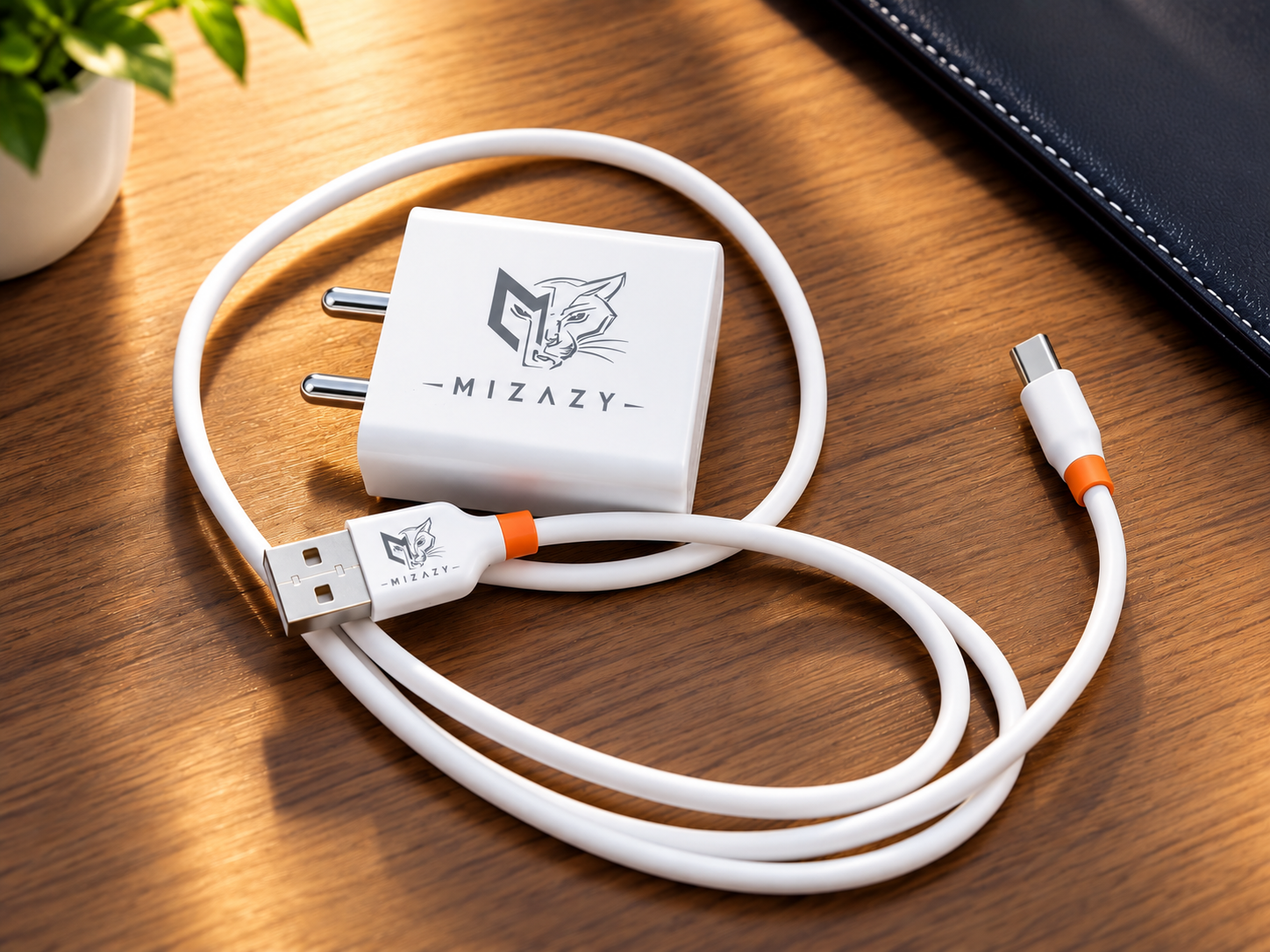
Chargers
A fast mobile charger is a power adapter that can offer more power than a basic phone charger, through USB-C, USB-A, or both. The watt number on the box is the maximum the charger is built to offer. It is not the speed your phone is guaranteed to accept.
Actual charging speed depends on the phone, the charging protocol it supports, the cable, and whether that cable and charger work together. A 135W listing does not mean every phone will charge at 135W.
What fast charging means
Fast charging means the charger and the phone negotiate a higher-power mode than a slow 5-watt trickle, when both sides support it. If the phone only accepts a modest rate, a larger adapter cannot force a higher one. If the cable cannot carry the mode the phone expects, the charge falls back.
Read fast as a capability of the adapter, then check the phone manual or the phone settings for what that handset supports. The charger page cannot know your handset.
USB-A and USB-C ports
USB-C is the oval port on most current phones and on many chargers. USB-A is the older rectangular port. A USB-C charger with only that port is the simple match for a USB-C phone, provided you have a USB-C cable. A USB-C and USB-A charger gives you one of each, which is useful when two devices, or an older cable, need different plugs.
The Mizazy 135W Super Fast Charger lists USB-C and USB-A ports and an intelligent chip. The Mizazy 20W USB-C Power Adapter lists a single USB-C output and is described as iPhone compatible. Both are mobile chargers. They are not the same tool.
How to read wattage
Wattage is the maximum output the charger listing states. 20W and 135W Max are different ceilings. A higher ceiling can be useful for a device that is allowed to draw more power. It does not raise the ceiling of a phone that stops at a lower rate.
Use 20W when you want a compact USB-C adapter in the range many phones are designed around, and you have read that your phone can use a USB-C charger. Use the 135W listing when you want the higher maximum, both port types, and the intelligent chip the page describes. Do not buy 135W because you expect every handset to take 135W.
Device compatibility and charging limits
The phone decides how much power it will take. The protocol it supports, its battery condition, and its temperature all sit between the adapter and the result you see on screen. Two phones on the same charger can show different times.
The 20W adapter is the iPhone-compatible USB-C model in this range. The 135W charger is the USB fast charger with USB-C and USB-A. Compatibility still means a supported device and a suitable cable, not a promise for every phone, tablet, or laptop.
Cable compatibility
The port on the charger has to match the cable, and the other end of the cable has to match the phone. A USB-C charger without a cable in the box still needs a cable you already trust. A charger that includes a cable saves that step only for the connector that cable uses.
The 135W box includes a 1m charging cable. The 20W adapter does not include a cable. If you buy the 20W adapter, plan on a separate USB-C cable that suits the phone. If you buy the 135W charger, the included 1m cable is part of the published box contents, and the second port is still there for another cable you supply.
Safety and build
A charger should list basic protections and a recognisable seller, and it should not get forgotten under a cushion while covered. The 135W page describes an intelligent chip that detects the connected device and sets current for a compatible device. That is a control feature, not a statement that every device will fast-charge.
Use the cable in good condition. A loose connector that heats up is a reason to stop, not a reason to press the plug harder. Unplug a charger you do not need to leave running overnight if the phone is already full.
How to choose the right charger
Start with the phone port. If it is USB-C and you want a small iPhone-compatible adapter, the 20W USB-C model matches that brief, with the cable bought separately. If you want USB-C and USB-A on one adapter, plus the higher listed maximum and a cable in the box, the 135W model matches that brief.
Then check the phone. If the handset documentation stops well below 135W, the extra maximum is unused headroom, not a faster charge. The charger category shows both adapters together so the port count and the included cable are easy to compare.
Common fast-charging mistakes
The usual mistakes are simple. Buying the highest watt number and assuming the phone will take all of it. Forgetting that the 20W box has no cable. Using a worn cable and blaming the adapter. Covering a warm charger. Comparing two chargers by the printed maximum while ignoring USB-C versus USB-A.
Another mistake is treating an intelligent chip as a bypass of the phone limit. The chip is there to recognise a compatible device and supply an appropriate current. The phone still has the last word.
Buying checklist
Check these points on the product page, then check them against the phone you actually own.
- The phone port is USB-C, USB-A, or you have a cable that bridges them safely.
- You know whether you need one port or both USB-C and USB-A.
- You have read the wattage as a maximum, not as a guaranteed phone speed.
- The 20W adapter is USB-C, iPhone compatible as listed, and does not include a cable.
- The 135W charger lists 135W Max, USB-C and USB-A, an intelligent chip, and a 1m cable in the box.
- You accept that charging speed depends on the device, protocol, cable, and charger together.
Questions
Will the 135W charger charge every phone at 135W?
No. 135W Max is the charger maximum. The phone, its charging protocol, the cable, and compatibility decide the actual speed. Many phones take less than that maximum.
Does the 20W USB-C adapter include a cable?
No. The 20W box contains the adapter and packaging. You need a separate compatible cable. The 135W box includes a 1m charging cable.
What is the difference between the two Mizazy chargers?
The 20W model is a compact USB-C adapter listed as iPhone compatible, without a cable. The 135W model lists USB-C and USB-A ports, an intelligent chip, a higher maximum, and a 1m cable in the box.