TWS Earbuds vs Bluetooth Neckband: Key Differences
By MIZAZY · 15 November 2026
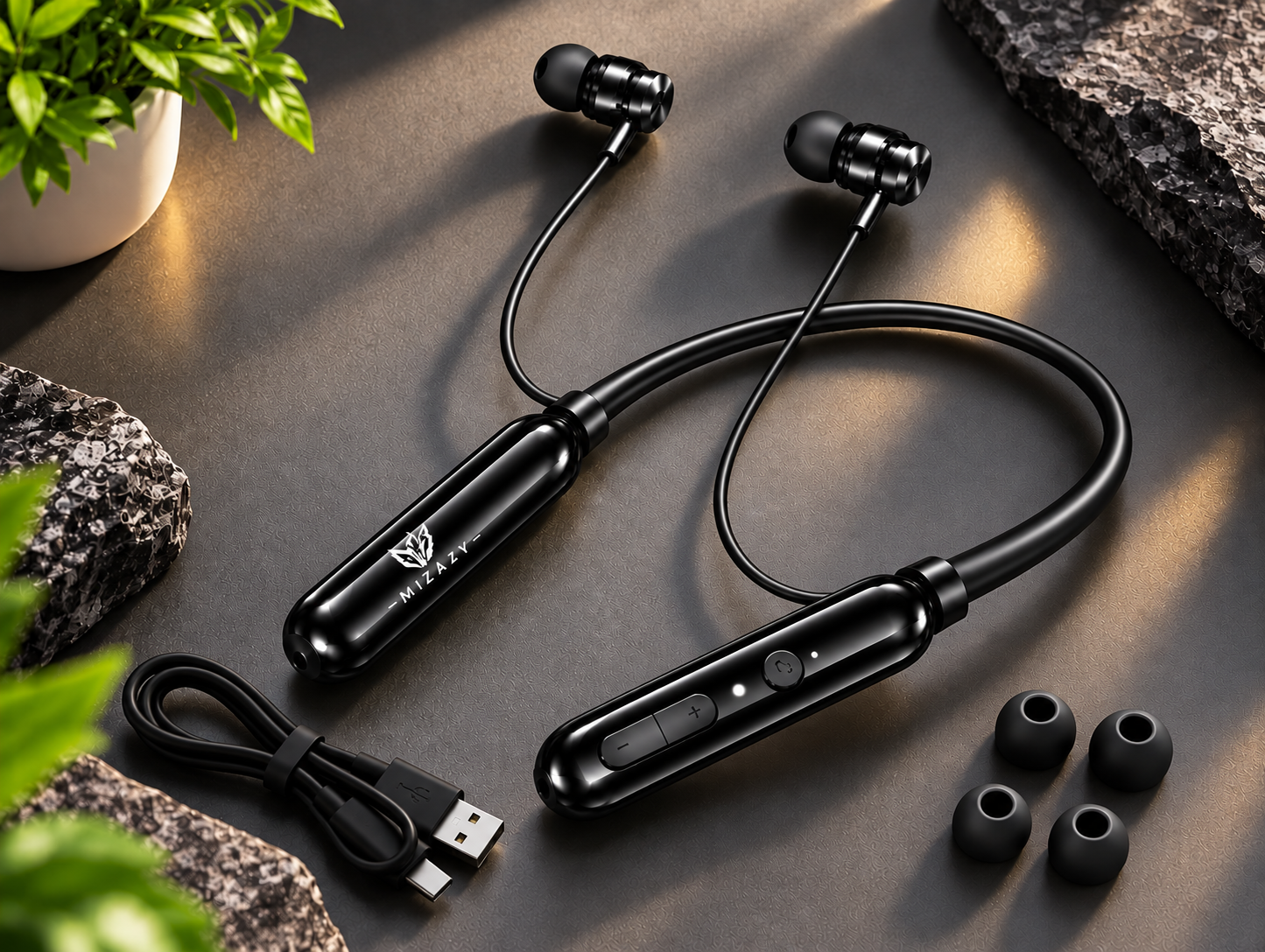
Comparison
TWS earbuds vs neckband is a design choice before it is a sound choice. True wireless earbuds are two separate buds and a case. A Bluetooth neckband is a band you wear around your neck, with earphones attached. Neither style is automatically the better one.
This comparison uses two published Mizazy products: Mizazy Wireless Buds 104 and the Mizazy Equalizer Bluetooth Neckband. The hour figures are not interchangeable, because one listing includes a charging case and the other lists playtime for the neckband itself.
What TWS earbuds are
TWS means true wireless. There is no cable between the left and right bud. You take them from a case, pair them once, and put them back in the case to charge. They are the usual meaning of wireless earbuds in a current shop.
Buds 104 are TWS earbuds listed with about 35 hours of backup with the charging case, Bluetooth 5.0, a quad mic, environmental noise cancellation, and HD sound. Those are calling and music details for a bud-and-case design. See the earbuds category if you want the pair beside the other TWS model.
What a Bluetooth neckband is
A Bluetooth neckband, sometimes called neckband earphones or a wireless neckband, rests on your neck. The earphones lift to your ears and drop back to the band when you pause. You are less likely to put a single bud down and lose it, and you are wearing the band even when the earphones are out.
The Equalizer listing includes up to 100 hours of playtime, 13mm drivers, and Bluetooth 5.2. The product title also includes magnetic earbuds, so the earphones can attach to the band when you are not listening. The neckband category is where that model is shown.
Design and portability
Earbuds disappear into a pocket because the case is the whole package. A neckband is longer and stays in place around your neck, which some people prefer on a commute and others find in the way of a collar or a bag strap.
Choose the shape you will actually carry. A case you forget at home leaves the buds uncharged later. A band you dislike wearing will stay in a drawer no matter what the battery listing says.
Comfort and everyday use
Earbuds put all of their weight in the ear. Comfort depends on the tip and the shell. A neckband moves some of the weight to the neck and can feel easier if in-ear pressure bothers you, but the band is something you notice in warm weather and with some clothes.
Neither Mizazy listing claims a universal fit. If you already know that buds fall out, a neckband is a reasonable design to try. If you want nothing on your neck, stay with TWS earbuds and spend the decision on tips and seal.
Battery and charging
Do not treat 35 hours and 100 hours as the same kind of number. Buds 104 list about 35 hours of backup with the charging case. The Equalizer lists up to 100 hours of playtime. One figure depends on putting the buds back in a case. The other is the playtime listed for the neckband. Volume and calls change both.
Charging is different too. Earbuds charge from their case, and the case itself needs power. The Equalizer product title includes Type-C charging for the neckband. Read the box contents on each page so you know whether you must supply a cable.
Calls and microphones
Buds 104 list a quad mic and environmental noise cancellation. ENC here means help with background noise on a call. It is not active noise cancellation for the listener, and it is not a reason to say the earbuds are better for every conversation.
The Equalizer page leads with playtime, 13mm drivers, and Bluetooth 5.2, not with a quad-mic or ENC line. If calls are the main job, read the microphone wording on the product you are buying. If the page does not describe a microphone in the same way, do not invent one from the other product.
Music and general use
Buds 104 list HD sound. The Equalizer lists 13mm drivers. Those are different ways of describing playback. Driver size is not a score, and HD sound is not a measurement you can subtract from 13mm. Listen for whether voices and music stay comfortable at the volume you actually use.
For a desk or a quiet room, either design can be enough. For walking with a collar, a bag, and one hand free, try the shape first. The radio versions differ too: Bluetooth 5.0 on Buds 104 and Bluetooth 5.2 on the Equalizer. That is a spec difference, not a winner.
Which type suits which habits
TWS earbuds suit someone who wants a small case, nothing around the neck, and a listed call microphone. The Buds 104 details match that brief: a case, Bluetooth 5.0, a quad mic, ENC for calls, and HD sound.
A Bluetooth neckband suits someone who wants the earphones to stay with a band, who likes magnetic earbuds that park on the neck, and who is comparing the listed 100-hour playtime and 13mm drivers. It is a poor match if you dislike wearing a band, just as earbuds are a poor match if they will not stay in your ears.
Buying checklist and conclusion
There is no universal winner between these two. Pick the shape you will wear, then check the published battery wording, the Bluetooth version, and whether a microphone is actually described.
- Choose TWS earbuds if you want a case and no band.
- Choose a neckband if you want the earphones to hang from your neck.
- Read 35 hours with the Buds 104 case separately from up to 100 hours on the Equalizer.
- Use the quad mic and ENC notes only for the product that lists them.
- Compare Bluetooth 5.0 and Bluetooth 5.2 as listed versions, not as a verdict.
- Open both product pages before you decide.
Questions
Are TWS earbuds and a neckband the same product with a different cable?
No. TWS earbuds are separate buds with a charging case. A Bluetooth neckband is a band you wear, with earphones attached to it.
Is the Equalizer battery figure the same kind of number as Buds 104?
No. Buds 104 list about 35 hours of backup with the charging case. The Equalizer lists up to 100 hours of playtime for the neckband. They should not be compared as identical measurements.
Which Mizazy model is better for everyone?
Neither. Buds 104 fit a case-and-earbuds habit, with a listed quad mic and ENC. The Equalizer fits a neckband habit, with listed 13mm drivers, Bluetooth 5.2, and up to 100 hours of playtime.