USB 2.0 vs Fast Charging Cable: Understanding the Difference
By MIZAZY · 15 November 2026
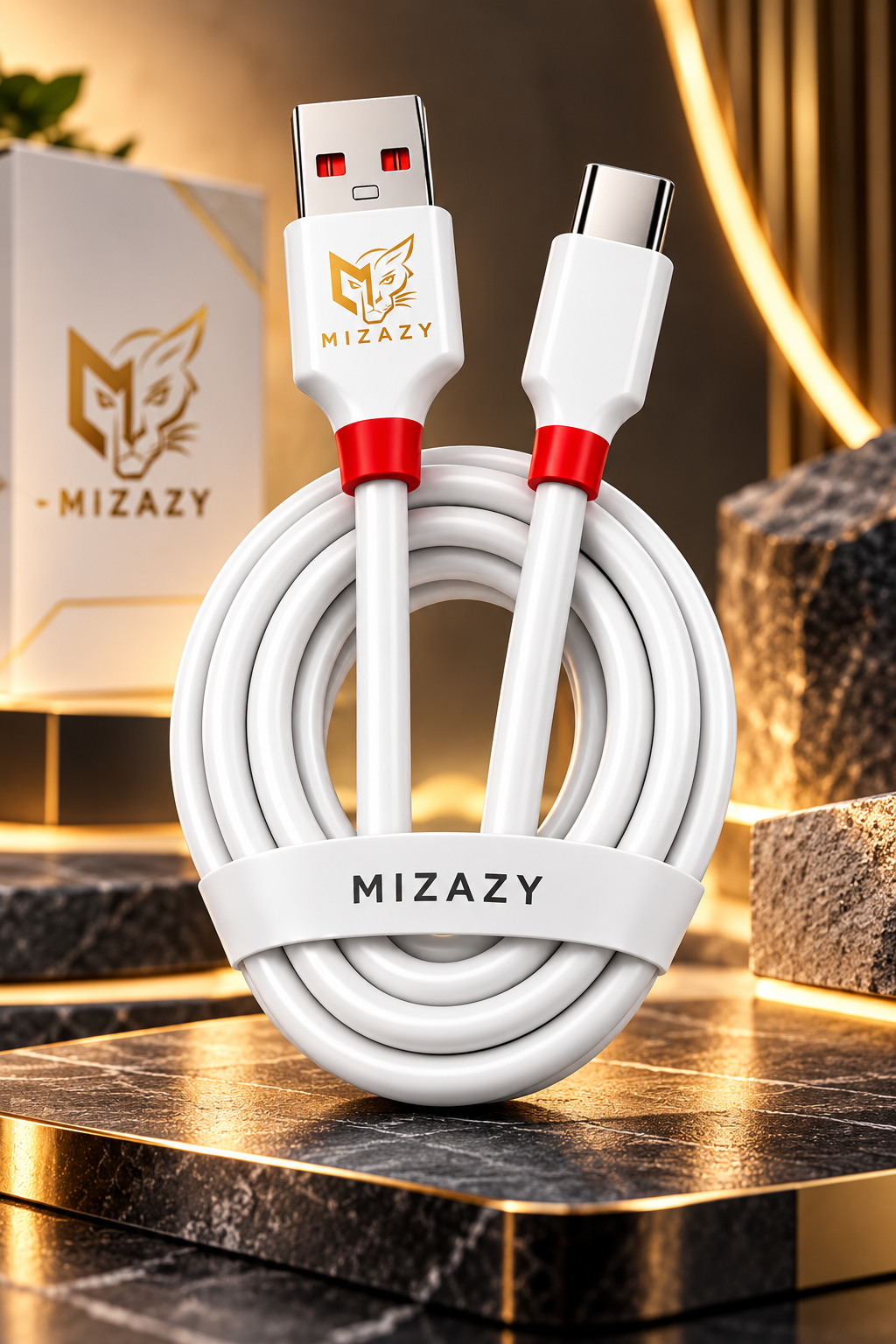
Data Cable
A USB 2.0 data cable is named for a data standard. A fast charging cable is named for a power ceiling. One product can carry both labels, and the labels still answer different questions. Mixing them up is how a watt number gets mistaken for a file-copy speed.
The Mizazy 65W Fast USB Data Cable is the listing that prints USB 2.0. The 120W and 140W pages describe data in other words. This guide keeps those words intact.
What USB 2.0 refers to
USB 2.0 is a USB generation associated with a maximum signalling rate of 480 megabits per second. That rate is a standard ceiling, not a measurement of your phone on a given afternoon. A cable that lists USB 2.0 is telling you which data generation it claims, not how many watts it can pass.
The 65W Mizazy page lists the data standard as USB 2.0 and the function as charging plus data sync. It does not print "480Mbps" as its own line. This article will not add that number to the 65W listing.
Data transfer speed in practice
The phone, the computer port, the storage, and the file sizes all sit under the standard's ceiling. A slow card or a busy computer can make a capable cable look slow. A short test with one small file will not show the ceiling either.
When a page prints a rate, read the words "up to". The 140W cable does that: up to 480Mbps. The 120W cable says high-speed data sync and stops there. Different sentences, different promises.
Charging and data transfer are different
Power and data share a cable and not a specification. You can raise the charging ceiling without changing the USB generation. You can also have a data rate written on a page that quotes a modest wattage.
On the 65W cable those lines sit side by side: 65W max output, and USB 2.0. The watt line does not redefine the data line. The data line does not redefine the watt line.
What cable wattage means
Wattage is the charging maximum the package highlights. The 65W page says up to 65W. The 120W page says up to 120W. The 140W page says 140W and up to 3A. Each page adds that the charger, the device, and the protocol decide the speed you see.
A higher charging wattage does not mean faster data transfer. Nothing on the 120W page says its data sync is quicker than USB 2.0, and nothing on the 65W page says 65W is a data speed.
The charger still has to match
A USB 2.0 cable into a small adapter will charge at the adapter's limit. The same cable into a charger the phone can negotiate with can charge faster, up to the lowest ceiling in the chain. The cable standard does not replace the brick.
None of these three Mizazy boxes includes a charger. Connector type on all three is USB-A to Type-C. The brick needs a USB-A port. The phone needs USB-C.
USB 2.0 and everyday phone accessories
For phone backups, USB 2.0 has been enough for years of photo and music copies. It is a poor match only when you regularly move very large files and you have ports and storage that can go faster. Most phone-to-laptop sync does not need a faster label to be useful.
That is why a Type-C data cable can list USB 2.0 and still be the right spare. The 65W listing is that combination: a fast-charging maximum of 65W, and a data standard of USB 2.0, in a white USB-A to Type-C lead.
How to choose between these listings
Choose the 65W cable when you want USB 2.0 written on the page. Choose the 120W cable when you want the 120W ceiling, a 1 metre PVC jacket, metallic connectors, and high-speed data sync without a printed megabit rate. Choose the 140W cable when you want the nylon braid, 1 metre, up to 3A, and up to 480Mbps.
Do not choose the 140W cable because you think a higher watt number is a higher USB generation. The page never says that. The data cable category lets you open the three specifications together.
Misconceptions to drop
USB 2.0 is not "the slow charging standard". It is a data generation. Fast charging is not "USB 3". A fast charging data cable can be USB 2.0, as the 65W page shows.
Another miss is copying the 140W cable's 480Mbps line onto the 65W or 120W pages. Only the 140W page prints it. The 65W page prints USB 2.0 instead.
Buying checklist
Separate the two questions before you add a cable to the cart.
- Data: USB 2.0 is listed on the 65W cable. Up to 480Mbps is listed on the 140W cable. The 120W cable says high-speed data sync.
- Power: 65W max, 120W max, or 140W, each as a ceiling the phone and charger can undercut.
- Connectors: USB-A to Type-C on all three.
- You are not treating a higher wattage as a faster file copy.
- The charger is separate. These boxes are the cable only.
Conclusion
Read USB 2.0 as data and wattage as charging. The Mizazy 65W cable is the one that states USB 2.0 next to a 65W maximum. The 120W and 140W cables state higher charging ceilings and their own data wording.
Pick the line you came for. Leave the other line alone.
Questions
Does USB 2.0 mean the cable charges slowly?
No. USB 2.0 is the data standard listed on the 65W cable. That same page lists up to 65W charging. The phone and charger still decide the actual rate.
Does a 120W or 140W rating mean faster data than USB 2.0?
The wattage is not a data speed. Only the 140W page prints a data figure, up to 480Mbps. The 120W page says high-speed data sync without a megabit number.
Does the 65W page print 480Mbps?
No. It prints USB 2.0. The up to 480Mbps line belongs to the 140W cable listing.